No. 01History4 min read
The Evolution of Business Shirts
From hidden linen undergarment to the centrepiece of office dress: how the shirt moved from beneath the clothes to the front of professional life.
For most of its long history the shirt was not meant to be seen. It was a layer worn next to the skin, beneath doublets, waistcoats and coats, and its main job was practical: to absorb sweat and protect expensive outer garments that could not easily be washed. The story of the business shirt is the story of that hidden garment gradually moving into view until, by the late twentieth century, it could stand on its own as the principal item of men's workwear.
An undergarment with a public edge
Early shirts were typically made of linen, cut from simple rectangles and pulled on over the head. Only the collar and the cuffs showed beyond the outer clothing, so those edges carried the shirt's social meaning. Clean, white linen at the neck and wrist was widely read as a sign that the wearer could afford frequent laundering and did not do dirty manual work. That association between a fresh white collar and respectable occupation would prove remarkably durable.
The age of the detachable collar
During the nineteenth century the detachable collar became common. Collars and cuffs soiled faster than the body of the shirt, so making them separate pieces, fastened with studs, allowed a man to change them daily while wearing the shirt itself for longer. Their manufacture is often traced to Troy, New York, which became known as a centre of collar making. These collars were heavily starched and often tall and stiff; later versions were made of coated or celluloid materials that could be wiped clean. Shapes varied from upright wing collars to turned-down styles that are recognisable ancestors of today's point collar.
Opening the front
Most shirts were still pullovers with a partial opening at the chest. The coat-style shirt, buttoning all the way down the front like a coat, appeared in the second half of the nineteenth century and gradually became the standard construction during the twentieth. It was easier to put on, easier to iron and easier to fit, and it gave us the full front placket that every modern office shirt still uses.
The attached collar takes over
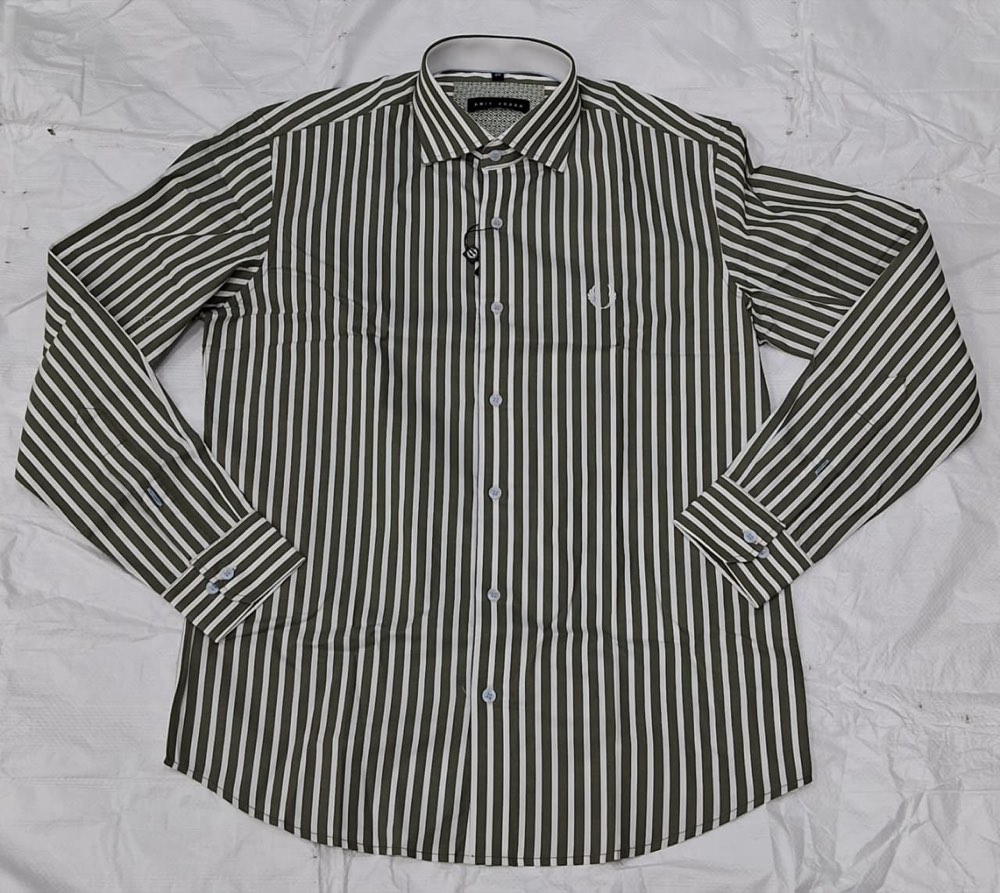
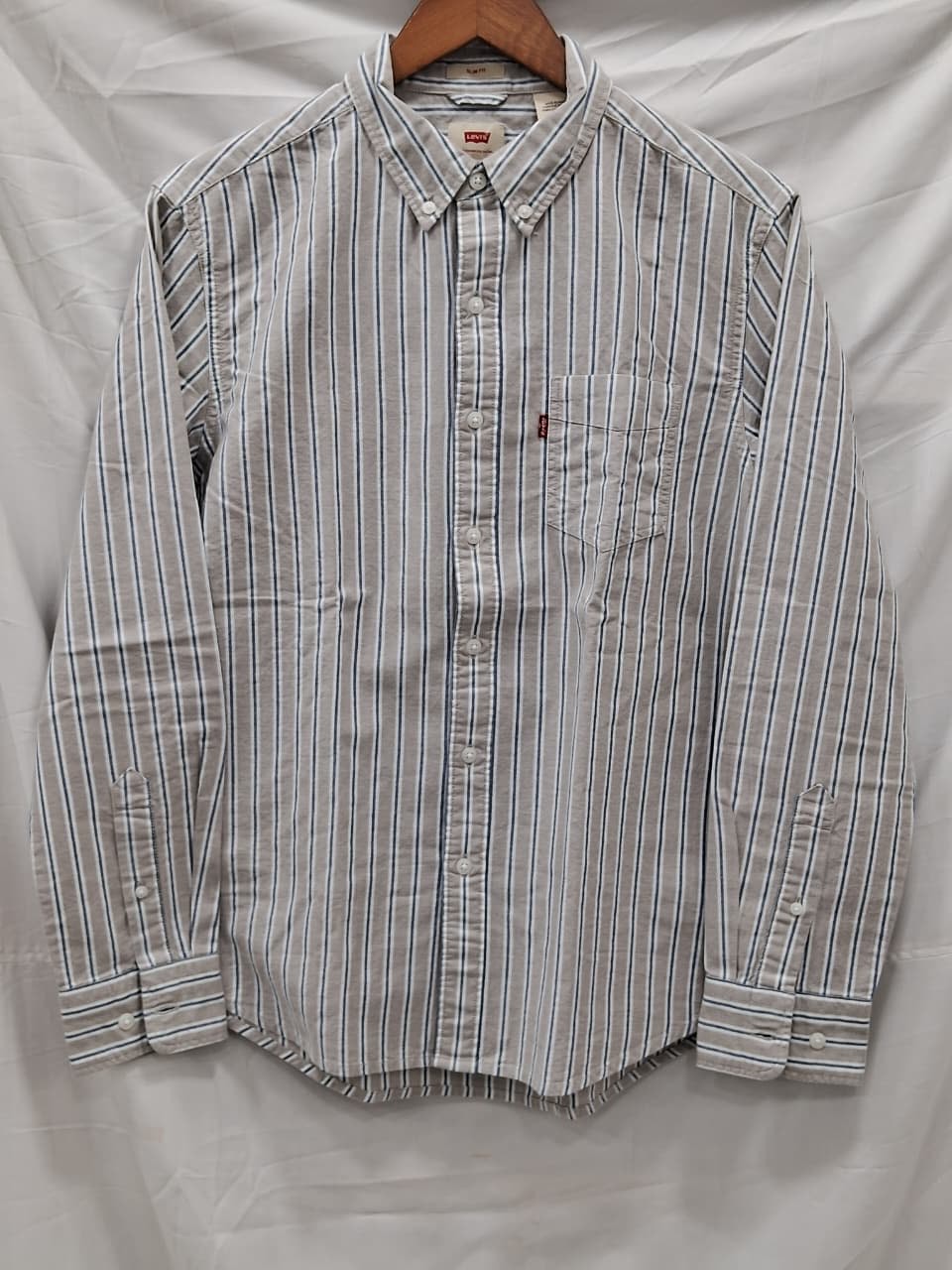
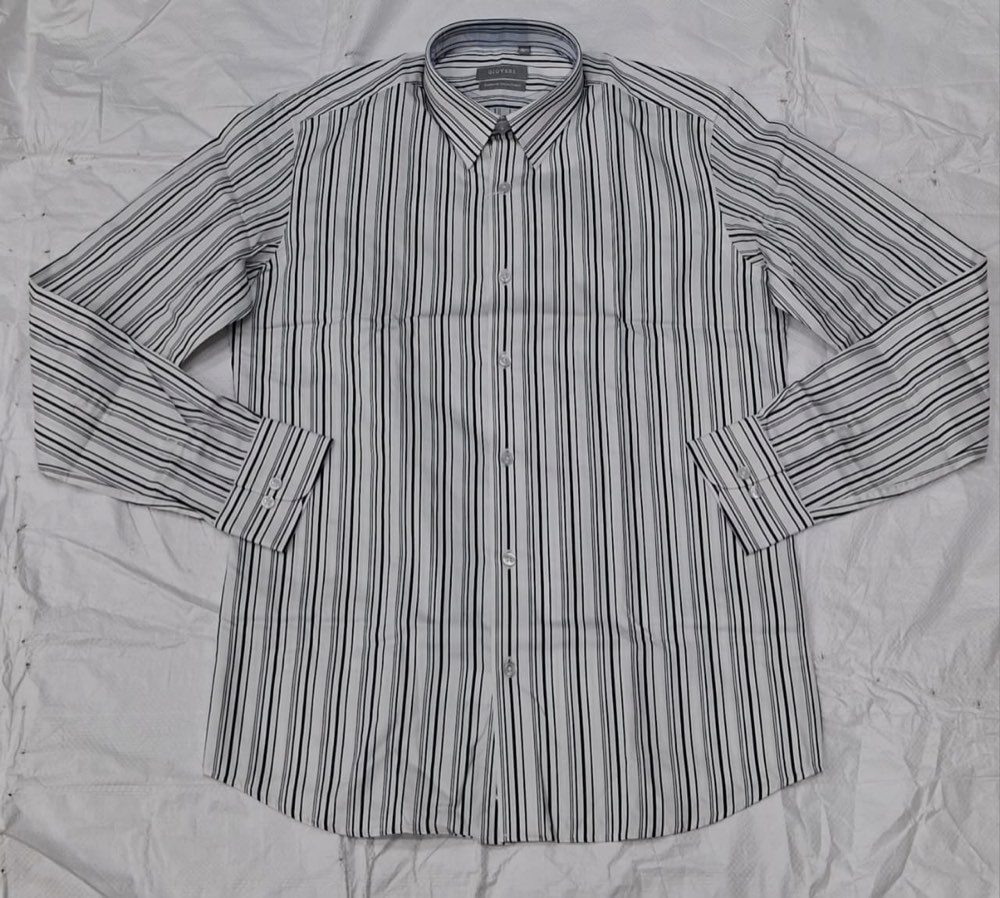
In the early decades of the twentieth century, softer, attached collars gained acceptance, first for leisure and then, steadily, for work. Interlinings and fusing techniques later allowed an attached collar to hold a crisp shape without heavy starch. The button-down collar, associated with sporting dress, was adopted by shirtmakers and settled into a more relaxed corner of business dress. Coloured shirts and stripes also became more accepted, although white remained the formal default for much of the century.
New fibres and easy care
After the Second World War, synthetic fibres and polyester-cotton blends promised shirts that needed less ironing. Ready-to-wear sizing by collar and sleeve measurements made shirts widely available off the rack. The business shirt became an everyday, mass-produced garment rather than a tailored or semi-tailored item.
Business casual and the modern office
From the late twentieth century, many workplaces relaxed their dress codes. The tie became optional in many offices, and button-down Oxfords, open collars and chinos entered working life under the label of business casual. Into the twenty-first century, slimmer cuts, stretch blends and easy-care finishes extended the shirt's range further, so a single garment can now cover a client meeting, a long day at the desk and dinner afterwards.
What history tells today's buyer
Several old habits survive in modern formal business shirts. The collar remains the focal point, which is why it carries interlining and removable stays. White and pale blue still read as the most formal colours. And the full button front, a nineteenth-century novelty, is now so standard that we no longer notice it. Whether you are buying business shirts in Mumbai for a first job or refreshing a long-standing wardrobe, knowing where these details came from makes it easier to judge which ones still matter: a well-shaped collar, clean construction and fabric suited to the day ahead.